
Projected tanker transits through the Salish Sea could more than quadruple, dramatically increasing the risk of accidents and major oil spills, and impacts from underwater noise and pollution in critical habitat for endangered Southern Resident orcas and salmon, coastal communities, and regional economies.
Burrard Inlet is part of the Salish Sea, a transboundary, estuarine ecosystem that stretches across the coastal waters and watersheds of the Strait of Georgia, the Strait of Juan de Fuca, and Puget Sound in southwestern BC and northwestern Washington. Named for the Coast Salish First Nations who have lived in this region for over 10,000 years, the Salish Sea is one of the largest, most biodiverse marine ecosystems in the world. This includes being the primary rearing area for salmon migrating through BC and Washington’s coastal rivers.
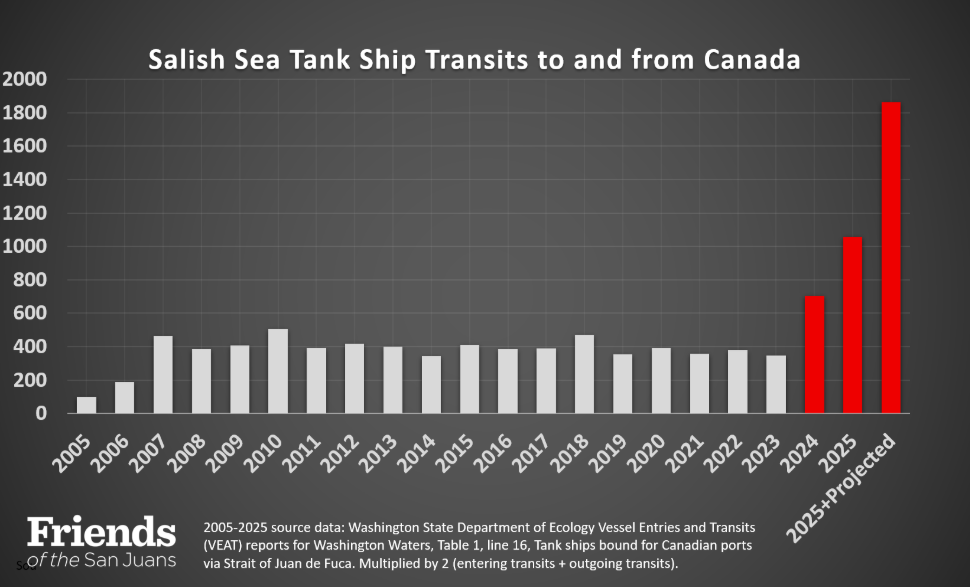
Tanker traffic surpassed 700 transits in 2024, exceeded 1,000 in 2025, and is projected to reach nearly 1,900 annual transits as new LNG export facilities come online and proposed Canadian crude oil export projects advance.
From 2007 to 2023, annual tank ship transits to and from Canadian ports through the Salish Sea remained relatively stable, averaging 400 voyages per year. As shown in the graph below, that trend has changed dramatically. Tanker traffic surpassed 700 transits in 2024, exceeded 1,000 in 2025, and is projected to reach nearly 1,900 annual transits as new LNG export facilities come online and proposed Canadian crude oil export projects advance. The surge is being driven by the recently completed Trans Mountain Pipeline Expansion and proposals for additional tar sands crude oil infrastructure, including a new one-million-barrel-per-day pipeline to Roberts Bank, just north of the U.S.-Canada border. If realized, these projects could push tanker traffic to more than four times historic levels, substantially increasing the risk of shipping accidents and major oil spills while adding underwater noise, pollution, and disturbance to critical habitat for Southern Resident killer whales and salmon. The transboundary impacts and risks would extend beyond wildlife, severely impacting Tribal Treaty Rights and First Nation resources, coastal economies, and Salish Sea communities on both sides of the border.
Learn More
- History of the Trans Mountain Pipeline
- The Government of Alberta’s west coast oil pipeline submission
- Plain language summary of the oil pipeling submission
Take Action
Sign up to to stay informed about opportunities to participate & take action:
Write a letter in opposition to Canadian government officials about the West Coast Pipeline:
